Why this decision goes wrong
Positioning debates stall when they are run as arguments about wording. They resolve when they are run as a choice between named alternatives, each with an audience it wins and an audience it gives up.
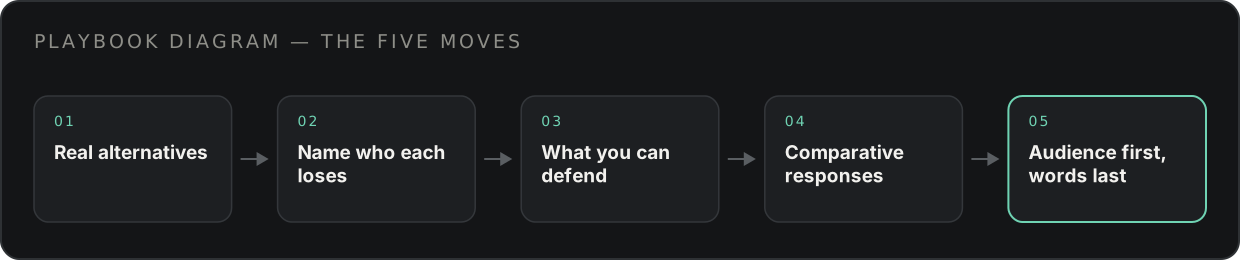
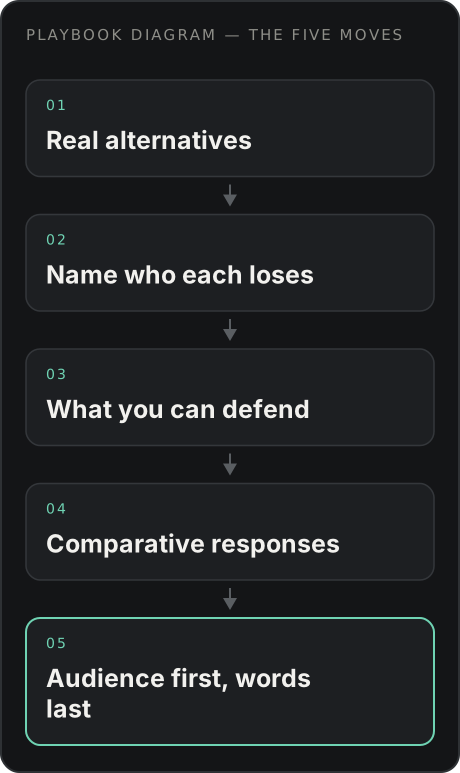
The five moves
- 01Write two or three real alternativesEach one names the audience, the problem it leads with, and the comparison it invites. Not three phrasings of the same idea.
- 02Name who each one losesMake the trade explicit before the budget commits. A proposition nobody rejects is a proposition nobody chooses.
- 03Check what you can actually defendWhich claim can the product support today, and which would require a roadmap? Positioning that outruns the product creates its own churn.
- 04Explore comparative responsesSame audiences, same context, propositions against each other — so you see divergence rather than politeness.
- 05Commit audience first, words lastAudience and problem, then claim, then creative expression. Reversing the order defends a line instead of a position.
What you bring
- Candidate propositions
- Audience segments and their alternatives
- Product capabilities available today
- Competitor claims
- Channel and creative constraints
What you get out
- Comparison of propositions by segment
- The audience each option trades away
- Which claims the product can defend now
- What to commit to first
Common failure modes
- Comparing wording instead of positions
- Choosing the option that offends nobody
- Claiming a roadmap as a capability
- Testing propositions in isolation
Running it in ATLASIO.ai
Set the decision up as a scenario, add the evidence you hold, and explore how simulated customers and market actors could respond to each alternative. The output is decision support — possible outcomes and the assumptions behind them, not a guarantee.