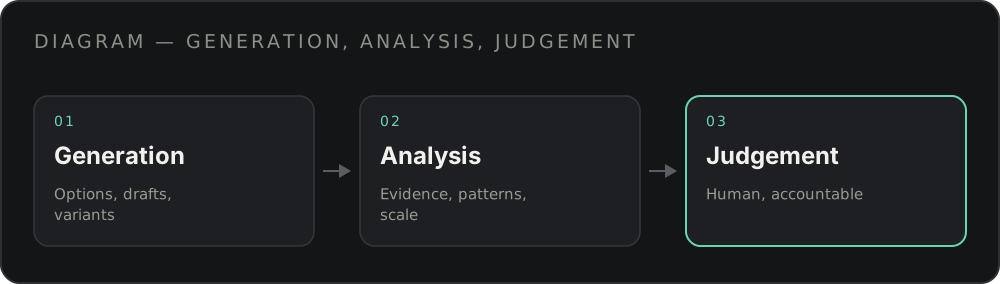
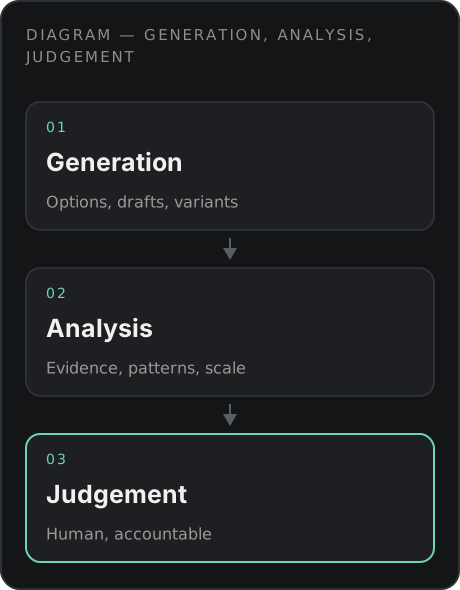
Three different jobs, handed over at once
Teams often adopt AI for one task and quietly hand it three: generating options, analysing evidence, and exercising judgement. The first two are well suited to it. The third is not, and blurring them is where most disappointment comes from.
Fluency is not evidence
A well-written answer feels like a validated one. It is not. Confidence in prose says nothing about the quality of the underlying evidence, and a decision process that rewards articulate output will drift towards whatever is easiest to say well.
The counter-discipline is simple and unglamorous: ask what evidence supports each claim, and what would falsify it.
Keep judgement with the accountable people
Judgement means weighing consequences that fall on real people and being answerable for them. That stays with the team making the call. AI can widen the option set and pressure-test reasoning; it cannot carry accountability.
A working division of labour
Use AI to broaden alternatives and surface what you have not considered. Use structured exploration to compare those alternatives. Use humans to decide, to state the assumptions out loud, and to own the result.
Widen the options with machines. Keep the judgement where the accountability is.
- Which of the three jobs are we actually delegating?
- What evidence sits behind this recommendation?
- What would falsify it?
- Who is accountable for the call?
ATLASIO.ai lets you set up this kind of question as a scenario and explore how simulated customers and market actors could respond, using the evidence you already hold. Results are decision-support signals — possible outcomes, not guarantees.
Editorial perspective. No customer names, studies, statistics or results are cited on this page.